In Kano State, paper-based medical record systems are costing patients time, money, and even the continuity of care. When files are lost or incomplete, patients face repeated tests, delayed treatments, and unnecessary stress. The state’s ongoing transition to digital health systems has been slow and uneven, leaving a fragile health data environment in which the risk of record loss persists. The state’s fragile digital patient information ecosystem reveals a healthcare system caught between handwritten files and incomplete digital solutions. Until records are properly digitised and digitalisation is fully implemented, patients will continue to pay the price.
When Nazifi Umar arrived early at Murtala Mohammed Specialist Hospital in Kano to fix a date for a long-awaited surgery, he never imagined his visit would stretch into weeks of frustration. Hospital staff searched several folders in the records room but could not locate his medical file.
“They told me my file was missing,” he recalled. “I had already done several tests, but because the file could not be found, I had to repeat everything. I spent more money and waited weeks before the surgery was finally done.”
Nazifi’s experience reflects a deeper challenge in Kano State’s healthcare system: a fragile transition from paper-based record-keeping to digital health systems that remain incomplete, fragmented, and poorly governed. This problem highlights the state’s emerging Digital Public Infrastructure (DPI) for health, which aims to unify patient data, improve accessibility, and reduce the risk of data loss.
A Patchwork of Paper and Digital Systems
Kano State has hundreds health facilities across all levels of care spread across its 44 local government areas, with at least 90 per cent publicly owned, meaning roughly nine in 10 facilities are government-operated. While the state government has announced plans to digitise healthcare delivery, findings by WikkiTimes show that the transition remains uneven, with hospitals operating a mix of fully manual, partially digital, and, in rare cases, fully electronic systems.

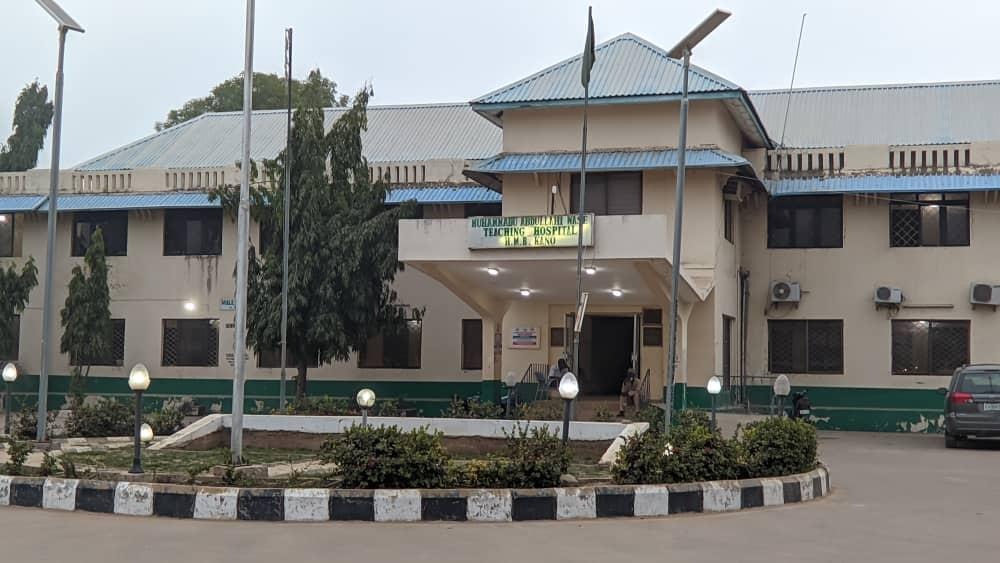
At Muhammad Abdullahi Wase Teaching Hospital, digitalization remains limited. A doctor working in the emergency unit, who requested anonymity and gave his name as Dr. Sani Kabiru Baba (not real name), said there is no digital system for storing patients’ records in the public section of the hospital.
“Everything is written manually in files. Test results and scans are placed inside the patient’s file,” he said.
A nurse at the hospital, Sadiya Adam, confirmed that all patient information in the public wing is kept in physical files. Similarly, at Murtala Mohammed Specialist Hospital, Nurse Muhammad Ibrahim Mustapha stated that computers are used solely for payment processing, while patient records remain paper-based.

However, an administrative officer at Muhammad Abdullahi Wase Teaching Hospital explained that the situation is not uniform across the facility. According to him, while the public section operates entirely on manual records, another section of the hospital that oversees the National Health Insurance Scheme (NHIS) runs a paperless system, where patients’ personal details and medical records are stored and managed digitally.

At Gezawa General Hospital, a doctor said digitization of patient records has not yet begun.
“If a patient’s file is lost, a temporary one is opened,” he explained. “This creates challenges because previous medical history is missing.”
Some tertiary hospitals have also adopted partial digital solutions. At Aminu Kano Teaching Hospital (AKTH), an admin staff member who requested anonymity said doctors can access laboratory test results electronically.

“When results are ready, they are uploaded to the system, and doctors view them directly,” he said. “However, all other clinical information is still kept in physical files.”
In contrast, UMC Zahir Hospital in Gwale Local Government Area operates a digital system. A hospital staff member stated that patient records are managed electronically across departments.
“Everything here is digital. We only use paper if there is a system issue,” the staff said.
A patient corroborated this. Abubakar Maccido, who said his experience at the hospital has been entirely paperless.
“Whenever I go to UMC, they don’t use paper or any physical file,” he said.
“Everything is through a digital platform, from the reception to the doctor’s room. Even the laboratory is digital, as they share information electronically.”

Other private facilities, however, are still operating manual systems. Administrators at Sassauka Hospital and Supreme Clinic, both in Ungogo Local Government Area, confirmed that patient records at both facilities are entirely paper-based.
Patients Bear the Cost
For patients, the consequences of weak record management are severe.
Maryam Aminu recalled how her antenatal file went missing in 2018 while she was about to undergo a Caesarean section at Muhammad Abdullahi Wase Teaching Hospital.
“They searched everywhere and could not find my file,” she said. “They had to open a temporary one for me.”
Ummi Adamu, from Gezawa town, said missing records affected her treatment for high blood pressure.
“The doctor could not really understand my condition because he could not see my previous records,” she said.
The Hidden Risks of Poorly Governed Digitalisation
Beyond missing files, experts warn that poorly governed digitalisation introduces serious risks to patient privacy and safety.
Cybersecurity expert Ahmad Khalil said digitizing health data without safeguards could result in data breaches, unlawful reuse of sensitive information, fraud, and even clinical harm.
“Without encryption, access controls, logging, and vendor oversight, patient data can be leaked at scale,” Khalil said.
“Poor authentication and lack of audit trails can lead to wrong medication or missed allergies.”
He added that health systems globally are frequent targets of ransomware attacks, which can prevent clinicians from accessing records when they are most needed.
Nigeria’s Digital Health Framework, DPI and the Implementation Gap
Nigeria already has frameworks designed to guide safe digitalization. The National Information Technology Development Agency (NITDA) developed the Nigeria e-Government Interoperability Framework (Ne-GIF) to ensure that government digital systems are secure, standardized, and interoperable.
NITDA also oversees the Nigeria Government Data Exchange (NGDX), which is intended to enable secure data sharing across ministries, departments, and agencies, including the health sector. These initiatives are part of Nigeria’s DPI, a system of national platforms and protocols designed to make public services, including health, secure, interoperable, and accessible.
However, findings by WikkiTimes show that most health facilities in Kano are yet to connect to these national systems, leaving patient records scattered across paper files and isolated digital platforms.
Countries that have successfully adopted interoperable digital health systems illustrate what Nigeria and Kano could achieve. Estonia is the global benchmark for health data connectivity. Its system leverages the national X-Road platform for secure, real-time data exchange across public and private sectors, providing citizens with access to their comprehensive medical histories via a government-issued e-ID.
Finland is based on its national Kanta Services platform, which includes mandatory participation and strong regulatory enforcement. The system uses standardized protocols (like HL7 FHIR, a global standard that allows different health information systems to securely share and understand patient data) to ensure data availability across care settings, leading to improved care quality and reduced duplicate tests.
Experts from global digital governance and health institutions, including the World Bank, the United Nations, and digital public infrastructure initiatives such as Co-Develop, say these systems work not simply because they are digital, but because they are governed by strong standards, clear accountability, and robust data protection.
Government Promises, Ongoing Gaps
Despite current challenges, Kano State has announced ambitious plans to digitize healthcare delivery. The state government recently signed an agreement with eHealth Africa and the Ministries of Health and Science and Technology to introduce Electronic Medical Records (EMR) to replace outdated paper-based systems, digitize hospital and pharmaceutical inventory management, and develop advanced data systems for real-time disease surveillance and response.

However, WikkiTimes’ efforts to obtain official comments from the Kano State Commissioner for Health, Dr. Abubakar Labaran Yusuf, were unsuccessful despite repeated calls and text messages. Enquiries sent through the Ministry’s Public Relations Officer, Nabilusi Abubakar K/Na’isa, also did not yield results at the time of filing this report.
A System Still in Transition
While Kano State has taken steps toward digital healthcare delivery, evidence on the ground indicates that the system remains caught between paper files and fragmented digital tools.
Until patient records are securely digitized, interoperable, and aligned with national frameworks, patients such as Nazifi Umar will continue to experience avoidable delays and costs.
“I lost time, money, and peace of mind,” he said. “If my records were properly stored, this would not have happened.”
As Kano pushes forward with digital health reforms, the challenge is no longer whether to digitize, but how to ensure digitalization protects patients, improves care, and builds public trust
This report is produced under the DPI Africa Journalism Fellowship Programme of the Media Foundation for West Africa and Co-Develop.