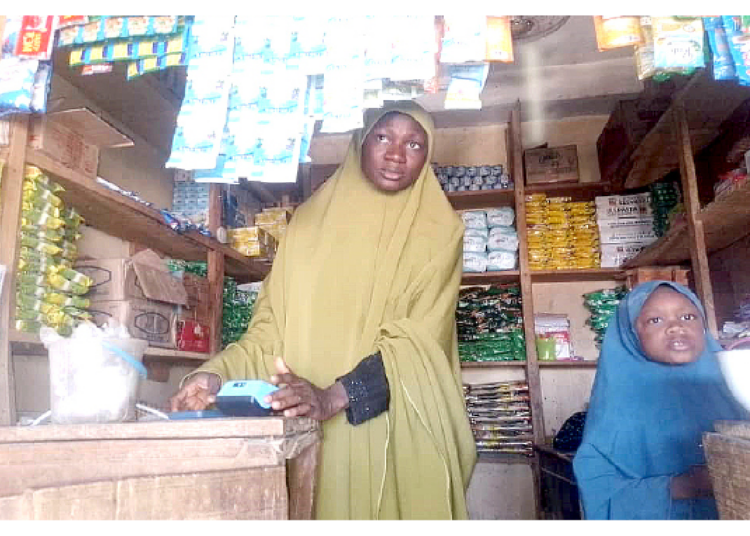
A report produced by MFWA’s Digital Public Infrastructure (DPI) Journalism Fellow, Kamal Ibrahim, has directly contributed to the distribution of 7,000 Point-of-Sale (PoS) machines to market women and young traders in Bauchi State, Nigeria. The intervention followed Kamal’s story exposing how lack of access to digital financial tools hindered business growth and financial inclusion.
Bauchi’s bustling markets rely heavily on cash transactions. While some traders used PoS machines to serve customers who prefer digital payments, many market women lacked access to the devices, losing customers to competitors who could accept electronic payments. This widened the digital divide and excluded thousands of women from Nigeria’s rapidly expanding financial ecosystem.
In early 2025, Kamal, a reporter with Leadership and a participant in MFWA’s DPI Journalism Fellowship, published the story “Women Traders in Northern Nigeria Thrive With PoS Technology, Overcome Hurdles.” The piece showed how PoS technology fosters financial inclusion but also revealed the struggles of women unable to access such devices. His evidence-based reporting prompted the Federal and Bauchi State Governments to take action.
Through the Nigeria Community Action for Resilience and Economic Stimulus (NG-CARES) programme, authorities distributed 7,000 new PoS machines to market women and youth to support their business operations. This timely response enabled thousands of traders to embrace digital transactions and strengthened local economic participation.
Kamal combined data analysis with interviews, fact-checking, and impact-driven storytelling to expose gaps that authorities later addressed. He credits the MFWA DPI Fellowship for enhancing his data-driven reporting skills. “While producing the original story that inspired this change, I applied key Digital Public Infrastructure reporting skills: analysing open financial datasets from the Central Bank of Nigeria (CBN), Nigeria Inter-Bank Settlement System (NIBSS), SIIP reports, and the GSMA’s State of the Industry Report on Mobile Money,” he told MFWA.
This story was one of the six investigative outputs produced by Kamal under the DPI Journalism Fellowship, which trains journalists to identify and report on DPI-related challenges using evidence-based approaches.
The government’s response demonstrated a clear recognition of community needs and highlighted the power of journalism to inform policy and improve service delivery to especially low-income earners, particularly women. The story spurred greater advocacy for equitable access to digital tools and deepened public understanding of the challenges that marginalised traders face. It affirmed the role of informed reporting in catalysing responsive governance and highlighted how investing in data-driven journalism can drive meaningful social change.
About the DPI Journalism Fellowship
The Digital Public Infrastructure (DPI) Journalism Fellowship is a flagship initiative of the Media Foundation for West Africa (MFWA), implemented in partnership with and with funding support from Co-Develop. The Fellowship trains journalists across West Africa to understand, investigate, and report on the region’s digital public infrastructure transformation. Fellows learn to produce evidence-based stories that raise public awareness, drive accountability, promote inclusivity, and encourage participation in digital innovation.
Since its inception in 2023, the DPI Journalism Fellowship has trained 65 journalists from 10 West African countries. Collectively, the Fellows have produced over 370 stories on digital IDs, payment systems, data exchanges, and other digital transformative processes. Through the Fellowship, MFWA and its partners are nurturing journalists who contribute to ensuring that digital progress benefits everyone and advances good governance across the region.