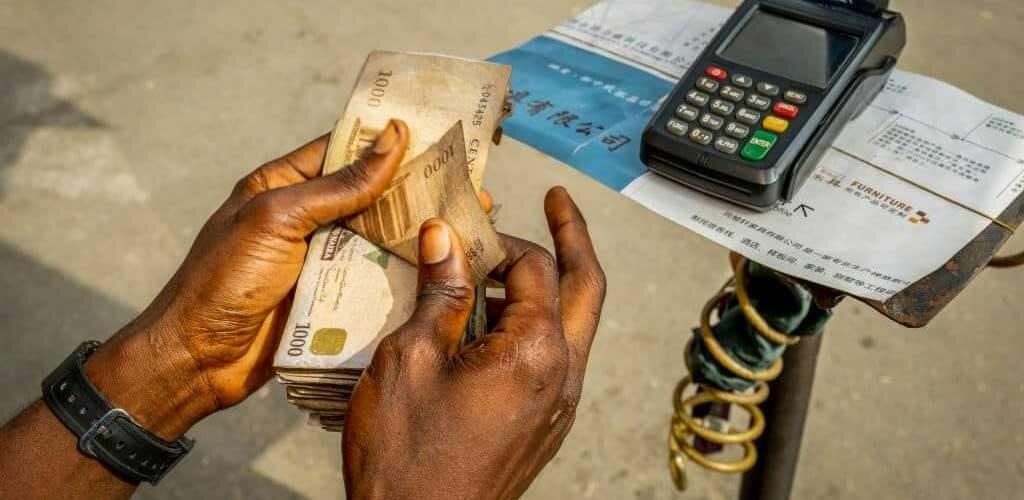
On a busy street in Sabon Gari, Kano, a Point-of-Sale (POS) agent watches nervously as a customer stares at his phone. The transaction has failed, but the money has already been deducted. The customer demands cash. The agent checks his terminal again. Still pending.
Moments like these are becoming routine across Kano State, revealing a fault line in Nigeria’s fast-growing digital payment system: delayed transaction reversals.
As Nigeria accelerates its transition toward a cashless economy, digital payments – through bank transfers, POS terminals, mobile apps, and USSD- have become public infrastructure. Yet beneath the rising transaction volumes lies a fragile fault line. For customers, delayed reversals mean trapped funds. For POS agents, they mean depleted working capital, reputational damage, and growing hostility from frustrated users.
When Digital Payments Fail, the Burden Falls on the Frontline
POS agents are the human interface of Nigeria’s digital payment system, especially for users without smartphones, stable internet, or direct bank access. But when transactions fail, agents are often left to absorb the financial and reputational burden.
In Unguwar Wambai area of Gwale Local Government Area, Sulaiman Adam Abubakar, owner of Alkhairat Communication Centre, said he uses the Moniepoint fintech platform and often experiences smooth reversals whenever a transaction fails.
“Whenever a transaction fails on Moniepoint, it is usually marked with the word ‘reversal,’ which means the transaction did not go through,” he said. “In such cases, there is no need to log a complaint because the money will be reversed after a few minutes or hours.”

However, not all agents share the same experience. In the Sabon Gari area of Fagge Local Government Area, Musbahu Muhd, owner of Abu Jafar Communication & More, said failed transactions often require him to file complaints through his POS terminal.
“Sometimes the money is reversed after a few hours or within 72 hours,” he said. “But about a month ago, I tried to transfer N60,000 for a customer;, the transaction failed, and I was debited. It took more than a month before the money was finally reversed, despite countless calls to Moniepoint customer care.”
Similarly, Farhan Ahmad, who runs Farhan Telecoms in Kuntau area of Gwale LGA, said failed transactions have become a normal part of his daily business operations.
“Most times, if I am debited, I take the risk and settle the customer immediately while waiting for the reversal,” he said. “Usually it does not take more than 72 hours.”

Muhd Sani, the owner of Zakin Kano Phone Store, Communication Centre, and PoS Service in Dakata area of Nassarawa LGA, said transaction reversals with fintech companies are usually faster than those handled by traditional banks. He explained that although failed transactions are not uncommon in electronic payment systems, fintech platforms often resolve such issues more quicklywithin a shorter period, easing the burden on PoS operators and customers.
“From my experience, reversals with fintech companies don’t take much time unlike banks. Once a transaction fails, the money usually returns faster, which makes our work easier and helps us maintain trust with customers,” he explained.

For customers, such failures can alter trust. In Gwale LGA, Abba Abdullahi Danjuma said a failed transaction changed his banking habits entirely.
“The money was never returned,” he said. “I filed a complaint, but nothing happened. I stopped using the bank.”
When reversals are delayed, tensions escalate. A pending transaction ties down agents’ float, limiting their ability to serve other customers. Worse, agents often face accusations of theft.
“If the money doesn’t reverse immediately, customers think you are lying,” Musbahu explained. “You are the one they see, not the bank or the system.”
These tensions expose agents to verbal abuse and, in some cases, physical threats, especially during peak periods such as salary days and festive seasons.
Customers Left in the Dark
Several Kano residents told WikkiTimes that delayed reversals often come with little or no communication from banks.
Augustine Uzochukwu, a First Bank customer in the Sabon Gari area, said a failed transaction was reversed within 24 hours.
“I just waited and hoped it would resolve,” he said.
Others were not as fortunate. Isma’eel Muhammad Yahaya, from Zangon Dakata, said an inter-bank transaction took over a month to reverse.
“They said I had to wait for the other bank to respond,” he recalled. “I only got information when I kept following up.”
The experience, he said, left him anxious about digital payments.
“Now I’m scared every time I want to make a transfer.”
What the Rules Say & Why Delays Persist
Nigeria’s payment Digital Public Infrastructure is overseen by the Central Bank of Nigeria (CBN) and the Nigerian Inter-Bank Settlement System (NIBSS), as the institutions mandated to ensure reliability, interoperability, and consumer protection across electronic payment channels.
Under existing CBN regulations, banks and payment service providers are required to reverse failed POS and web transactions within 48 hours, while failed instant transfers must be reversed within 24 hours after a complaint is lodged. Any bank that fails to comply attracts a N10,000 penalty per unresolved transaction, a sanction designed to deter delays and protect consumers.
NIBSS, which operates the Nigeria Inter-Bank Instant Payment (NIP) platform, is responsible for monitoring transaction failures, settlement outcomes, and reversal timelines across banks and fintech companies. Through real-time transaction monitoring and reporting frameworks, NIBSS tracks POS failure rates and reconciliation gaps that affect both customers and agents.
Yet interviews with bank staff suggest that operational realities often stretch these timelines.
Bashir Faragai, a manager at Jaiz Bank in Abuja, explained that reversals depend on how transactions are classified.
“Sometimes the transaction is not marked as ‘failed,’” he explained. “Banks wait for NIBSS settlement before initiating dispute resolution.”
At Sterling Bank’s BUK branch in Kano, Muhammad Bashir Salisu said reversal timelines vary widely.
“Same-bank or ATM transactions take about 24 hours,” he said.
“Inter-bank transfers can take three to five working days, while bank-to-POS transactions may take at least five working days.”
Enforcement Gaps and Agent Blind Spots
The Federal Competition and Consumer Protection Commission (FCCPC) and the Consumer Advocacy Foundation of Nigeria (CAFON), assert that consumers have a right to timely and automatic reversals for failed electronic transactions. The core principle is that a failed transaction means the service was never provided, entitling the consumer to a full and prompt refund without undue burden.
Digital payments expert Ahmad Khalil said stronger transparency could improve accountability.
“When reversal timelines are breached without consequences visible to the public, institutions lack incentives to fix the root causes,” he stated.
“Publishing failure rates, reversal performance, and enforcement actions would push banks and switches to invest in better infrastructure.”
Regulatory analysts also note that Nigeria’s payment rules remain largely customer-centric but agent-blind. While customers can escalate complaints to banks and regulators, POS agents who often bear immediate financial losses have limited formal protection.
Khalil argues that meaningful reform would require mandatory service-level agreements that protect agent float, public reporting of transaction failure and reversal statistics disaggregated by bank and channel, clear compensation or insurance mechanisms for agents affected by prolonged delays, and stricter interoperability standards to reduce failures across multiple switches.
A Threat to Financial Inclusion
Delayed transaction reversals can undermine the very goal Nigeria’s digital payment infrastructure is meant to achieve: financial inclusion.
Low-income users and small traders depend on immediate access to funds. When money is trapped, even temporarily, it disrupts livelihoods and daily survival.
Consumer protection advocates warn that repeated failures push users back to cash, eroding confidence in digital systems and slowing Nigeria’s cashless transition.
For Kano’s agents and customers, reforms cannot come soon enough.
“Digital payments are supposed to make life easier,” Yahaya said. “But when money gets stuck, it becomes a problem you carry alone.”
Until delayed reversals are treated as a systemic failure, not a personal inconvenience, Nigeria’s digital payment infrastructure will continue transferring risk downward, away from institutions and onto the people sustaining digital access at the grassroots.
This report is produced under the DPI Africa Journalism Fellowship Programme of the Media Foundation for West Africa and Co-Develop.