Nigeria’s leap into digital finance is thrilling. Yet millions remain excluded not only by distance, but also by the digital literacy gap. Closing this gap requires more than mobile apps and account ownership, ADEYEMI ADEPETUN writes.
Nigeria, one of Africa’s largest economies and the continent’s fintech leader (with over 430 companies as of February 2025), has seen remarkable growth in digital payment adoption. Yet participation across the population remains uneven.
While low financial and digital literacy are often cited as significant barriers, a host of interconnected systemic and infrastructural issues prevent millions of Nigerians from fully participating in the digital financial ecosystem.
One of the most cited barriers to adoption is the lack of awareness and understanding of the new technology or innovation among potential users, hindering their adoption.
These challenges are most pronounced in the rural areas and in about 4,834 underserved communities, reinforcing the dominance of cash and slowing Nigeria’s transition to a cash-light society.
State of financial inclusion
Though the state of financial inclusion in Nigeria suggests increasing access to financial services, significant challenges and gaps remain. The plan of the Central Bank of Nigeria (CBN) under its National Financial Inclusion Strategy (NFIS 3.0) was to reduce financial exclusion to five per cent by 2024. This was not achieved.
Data from Enhancing Financial Innovation and Access (EFInA) show that the percentage of adult Nigerians with access to bank or non-bank accounts (formal and informal) rose to 64 per cent of the adult population, up from less than a quarter in 2008 and 56 per cent in 2020.
EFInA revealed that the percentage of financially-excluded adults fell to 26 per cent in 2023 (down from 32 per cent in 2020).
According to the A2F 2023 Financial Inclusion State Factsheet, exclusion is highest in states like Borno (68 per cent), Zamfara (57 per cent), and Sokoto (60 per cent) driven by factors including digital illiteracy, poverty and infrastructural deficit.
Conversely, states such as Lagos (two per cent), Delta (four per cent) and Kogi (three per cent) have made significant strides in reducing exclusion.
Inclusion on paper, exclusion in practice
Bilikis Iyanda, a vegetable and spice seller, has run her stall at Ojuwoye market, Mushin, Lagos, for about 15 years. Her business thrives on face-to-face transactions, strong personal relationships and cash. She is digitally illiterate. According to her, her phone is for calls, not for money.
Narrating her experience with The Guardian, she said: “My neighbour, Mama Tunde, lost money when a ‘customer’ claimed to have paid with a transfer and showed her a fake alert. She was the third person to have fallen victim recently. I don’t trust this ‘transfer’ business. It is better to see the money, to touch the naira. They call it ‘online fraud’ or ‘419.’ For me, cash is real. The phone is for speaking with my children.”
Iyanda’s experience highlights how low digital security literacy, rather than refusal to modernise, drives resistance to payments. In effect, the payment rail exists, but trust and usability gaps keep her off it.
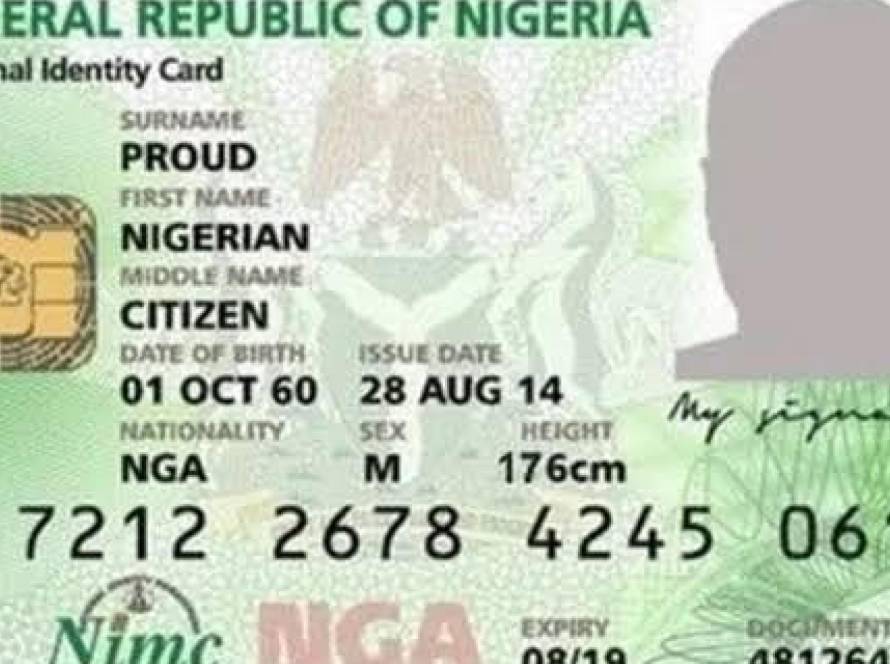
Aisha Yohanna, a small-scale poultry farmer in her late 40s, based in Maigatari, Jigawa state, shares almost the same sentiments. She owns a feature phone and has a bank account linked to her National Identity Number (NIN) and a mobile money wallet.
On paper, Yohanna is “financially included”.
In reality, she is digitally illiterate. She can answer a phone call, but she cannot navigate the unstructured supplementary service data (USSD) menu of her bank, interpret SMS alerts, verify transaction receipts or distinguish a secure login page from a phishing attempt. The English language interface on her phone is another barrier.
When her husband sends her N10,000 to buy feed, Yohanna’s only option is to seek help from the village’s sole agent banker (PoS operator), a young man named Danladi.
Yohanna hands her phone to Danladi and tells him the transaction details. Because she cannot input the USSD codes or navigate the app herself, she must also whisper her PIN to him – sacrificing confidentiality and control, two core principles of digital finance.
Danladi charges her an extra N150 fee for the withdrawal, above the standard fee. Yohanna pays what experts describe as an ‘illiteracy tax’ for using the infrastructure DPI was meant to make cheap, direct and empowering. Yohanna is on the digital rails, but she is being pulled by an agent rather than driving herself.
When trust blocks opportunity
At Adereti, a community in Ife South, Osun state, Adesoji Adekunle, a mobile phone technician, uses Nigeria’s Instant Payment system daily. The DPI’s payments rail works for him. However, Adekunle needs capital to expand his business. The DPI, leveraging the digital ID and data exchange rails, is designed to enable digital credit scoring. His bank should be able to check his transaction history via secure, consent-based data-sharing and offer him a collateral-free loan.
But Adekunle is blocked by a different angle of digital illiteracy: scepticism and data ignorance.
For instance, when his bank sends him an in-app message asking for his consent to share his transaction history and NIN data for a pre-approved loan enabled by the identity and data-exchange rails, Adekunle is immediately suspicious. He declines.
He remembers media reports of data breaches, phishing scams and loan sharks. He does not understand the concept of consent-based data sharing, a core principle of the DPI’s data rail. To Adekunle, asking for his consent to view his own data is a sign of a potential scam.
Adekunle deletes the notification. He effectively rejects the DPI’s most inclusive feature. The Digital ID rail has identified him, the payments rail has a record of his good cash flow, but low data literacy and trust prevent its use. He remains reliant on high-interest, informal lenders.
Iyanda, Yohanna, and Adekunle’s stories demonstrate how low digital literacy drags down the efficiency and inclusivity of Nigeria’s DPI strategy. This includes the inability to use USSD/App independently (low transaction literacy), inability to understand data privacy and consent forms (low data literacy) and inability to verify transaction receipts or compare fees (low financial literacy).
The DPI built the road — secure, fast, and cheap — but without widespread, localised, and context-specific digital literacy training, the people remain on the dirt path. The technology is world-class, but the human capacity to use it safely and effectively is lagging, turning inclusion into a mere statistic of account ownership rather than a catalyst for true financial empowerment.
Why illiteracy continues to drag inclusion
According to a digital payment analyst, Dr Dare Aladelola, the digital divide is not merely a metaphor. It is a physical reality in Nigeria.
Speaking with The Guardian, Aladelola listed the impediments as unreliable power supply, limited Internet access, agent network shortfalls, trust, security, and fraud concerns, and cost and usability barriers.
He said inconsistent electricity severely limits the operational efficiency of essential digital infrastructure, such as PoS terminals, ATMs and even the ability of citizens to charge their mobile devices for banking.
He revealed that despite the rapid growth of agent banking (PoS agents), the density and spread remain insufficient in underserved areas, often concentrating in urban centres.
Only 38% of Nigerian adults are financially literate
Recent reports citing the CBN (Nigeria Financial Literacy Survey, 2015) claim that only about 38 per cent of Nigerian adults are financially literate, meaning a significant majority (over 100 million) lack understanding of basic financial concepts such as saving, investing, and technology, leaving them financially vulnerable.
The President of the Fintech Association of Nigeria, Dr Stanley Jacob, said in digital payment, there is a strong marriage between literacy and trust. He affirmed that the percentage of Nigerian adults who are financially literate ranges between 36 and 38 per cent. He said this is quite low and remains a challenge, especially when one considers the rural-urban demographics, “and you find this gap, mostly in one part of the country.”
Speaking on a television programme monitored by The Guardian, Jacob, who is also the CEO of Zest Payment, said: “Before now, you would see a complete user interface in online and mobile payment; people find it tough to use.
“But lately, we have seen banks, fintechs, and operators introduce more interactive interfaces, not just in transactions but also in their apps. They are coming out to educate on particular products and others.”
On trust, he said, due to cybersecurity threats, especially the growing sophistication in the financial sector, people have continued to be vulnerable because hackers are not resting.
“A good number of Nigerians have been victims of fraudsters as a result of pressing or activating one thing or the other because they were not really enlightened about such, and that has eroded trust in the system. But all hands are on deck to curb this menace,” he stated.
Digital banking needs simplicity
In a chat with The Guardian, President of the Bank Customers Association of Nigeria, Dr Uju Ogubunka, said banks and financial technology firms need to do more to ensure customers understand their services and products. He said they should make messages about their products and services available in a way that people can easily comprehend and understand them.
He called on stakeholders to work towards ensuring the effective inclusion of people in empowerment programmes that would have a positive behavioural change on their relationship with digital payments.
Ogubunka, a former Registrar, Chartered Institute of Bankers of Nigeria (CIBN), said exclusion is dangerous for the Nigerian economy, stressing that it is not the fault of those who are illiterate, but the system.
“Somebody was already illiterate before you brought the digital system forward. There is a need to prepare people for a revolution. There should be no general assumption; the system should be more accommodating,” he stated.
Bridging the literacy gap, the former CIBN Registrar said there is a need to recognise that there is a weakness somewhere, “then ask how that can be tackled! There must be deliberate recognition that some people may not be capacitated because of their level of literacy, so we must ask ourselves, what can we do to ensure that these people actually fit into the system?
“We can then do programmes for them, seminars, workshops and even simple face-to-face discussions without tagging it to anything. Bank Customers Association can be co-opted by banks to handle this. We won’t tag it as a school plan because those who are not interested in schooling may use that opportunity to flee, but if we call it empowerment, I believe, we will make the needed changes as it were.”
Lagos State Chairman, Association of Mobile Money and Bank Agents in Nigeria (AMMBAN), Ibirogba Oluwagunwa, said the challenge of digital literacy should be looked at from all perspectives, including regulators, operators and users. He said digital literacy has come to stay and people should embrace it for simplicity and convenience’s sake.
“In our world today, people will say school or education is a scam, and we want digital literacy, we want to compete in the world, but we are not ready to do what it takes to compete globally. We cannot continue in the same way and expect a change. So, people need to embrace it, which also depends on how it is served. Operators, too, need to make the digital platforms more secure and interactive; it shouldn’t be too cumbersome to operate.
There should be more education, awareness and largely, integration,” he stated.
- This report is produced under the DPI Africa Journalism Fellowship Programme of the Media Foundation for West Africa and Co-Develop.