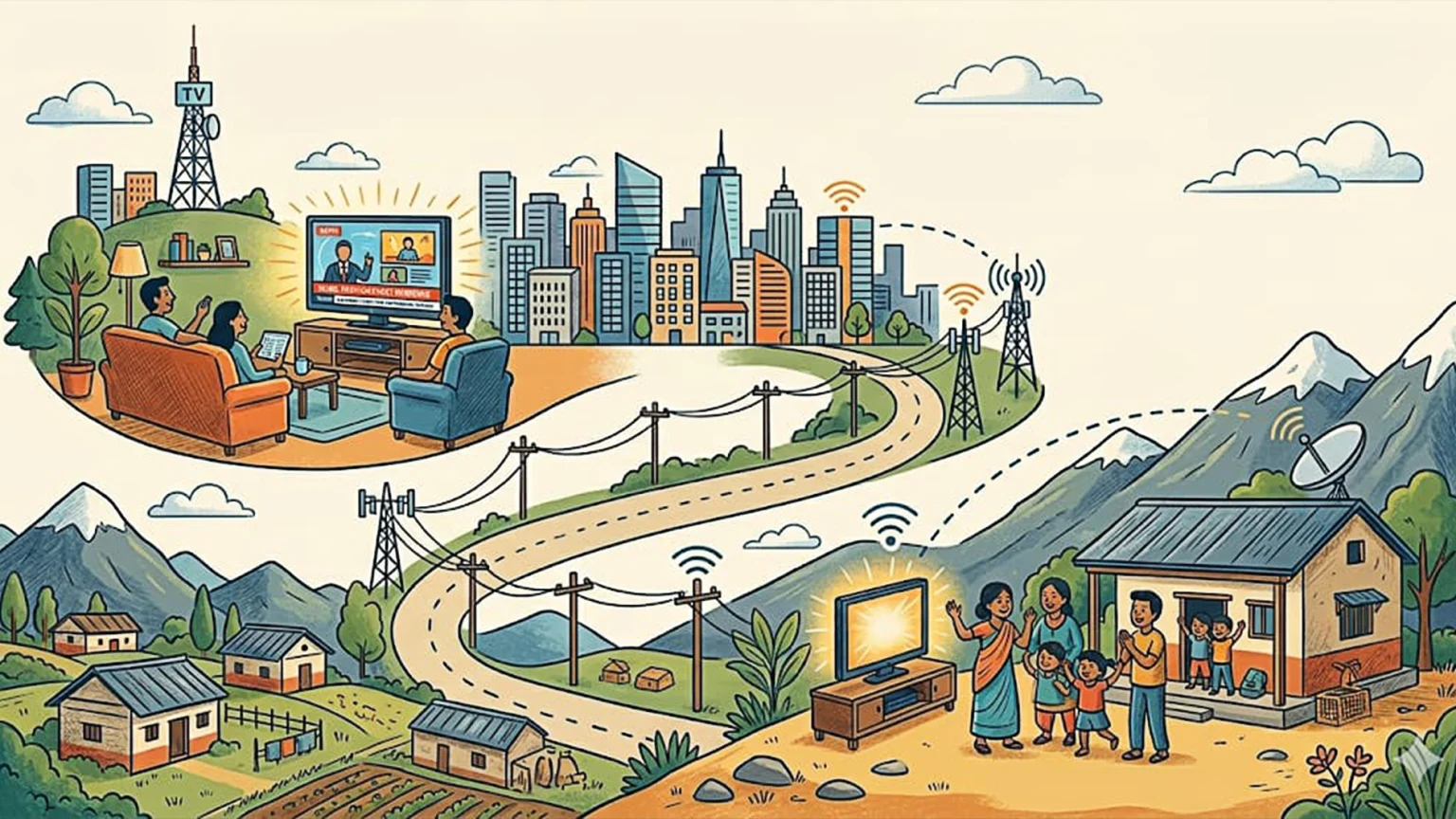
Scaling connectivity from cities to villages requires a shift from terrestrial limitations to orbital reach. By placing satellites at the centre of the digital switch over (DSO), this could serve as an opportunity to streamline delivery and ensure that high-quality content is a geographic privilege, ADEYEMI ADEPETUN writes.
Today, mobile-first, on-demand content is setting the pace globally. But traditional TV still matters particularly with respect to live events about sport, news and politics.
Nigeria is no exception. Millions still tune in for real-time coverage of major moments, live football matches, political debates and national elections. Despite the surge in Internet streaming, traditional broadcasting remains a trusted mass medium, capable of reaching large and diverse audiences simultaneously.
However, transmission of television signals in Nigeria is still largely analogue-based, which sometimes leads to faltering or zero signals, especially in the remotest parts of the country. This discourages the country’s television population.
This challenge should, however, have been overcome long before now with the digital switchover (DSO) as mandated by the International Telecommunications Union (ITU).
Nigeria has actually made several attempts at transitioning. But thus far, these efforts have shown that it is still far behind in the process. Only a fraction of households has been provided with tools to enable them to transition from analogue to digital television.
This delay is occurring at a time when the world is migrating to Internet-based television platforms and also various platforms without data subscriptions. Nigeria has continued to be bogged down by bureaucratic and contractual issues. Nigeria’s DSO has stalled for about two decades, with as many as 29 states still on analogue transmission.
The back story
GLOBALLY, the ITU Regional Conference in Geneva, Switzerland, had initially set a June 2014 deadline for the UHF band in 2006. The country’s digitisation playbook took off on October 13, 2008, when the late President Umaru Yar’Adua inaugurated a Presidential Advisory Committee (PAC) on Transition from Analogue to Digital Broadcasting.
The panel took about nine months to present its first report on June 29, 2009, but there was no follow-up until April 4, 2012, when the Federal Executive Council (FEC) claimed it released a White Paper on the report. Earlier in 2007, the Federal Government also approved June 17, 2012, as Nigeria’s transition date, three years ahead of the ITU mandate. The National Broadcasting Commission (NBC) had promised to use the three years (June 17, 2012, to June 17, 2015) to address every hiccup that might arise from the switchover and perfect the mechanism before the final date, but bureaucratic bottlenecks set in.
In June 2017, former Information Minister, Lai Mohammed, said the country would switch over from analogue to DSO in six states across the six geo-political zones by July of the same year.
Fast forward to 2023, only eight states—Lagos, Abuja, Kano, Rivers, Kwara, Enugu, Osun and Plateau had partially transitioned under a phased rollout plan.
Nigeria’s television landscape
DATA from satelliteworldtoday.com, while relying on insights from Intelsat and PwC reports, estimated the number of TV households in Nigeria to be between 23 million and 24 million.
Out of roughly 42 million households nationwide, the television penetration rate remains roughly 50 per cent to 55 per cent. However, this varies drastically by region, with southern urban centres seeing penetration as high as 75 per cent, while rural northern areas can be as low as 23 per cent.
The Nigerian market is currently dominated by Digital Terrestrial Television (DTT) with 11.7 million homes, and Direct-to-Home (DTH) satellite services with 9.6 million homes. Others, including IPTV and microwave, account for over 200,000 homes.
Gaps created by slow DSO pace
THE low rollout of digital broadcasting created several challenges, including zero signals (blackouts), affordability barriers, limited access to set-top boxes, and interoperability across platforms.
For instance, in a typical village in Katsina, like those of Rimi and Jibia Local Government Area, the DSO feels less like a technological revolution and more like a distant rumour from the city.
For Malam Kabiru Yusuf, a father of six in a village near Bindawa, he owns a 14-inch TV, a relic from the 90s. For years, he used a long bamboo pole with a wire mesh antenna to catch the faint signal of KTTV (Katsina State Television), the state broadcaster.
Recently, the state government announced a massive digital upgrade for KTTV, including a new 5KW transmitter and solar backups. On paper, this is progress. But for Yusuf, the digital signal is cliff-edged. Unlike analogue, where he could watch through the snow (fuzziness), digital is all or nothing. Yusuf’s village is just a few miles outside the new transmitter’s effective range, so his screen stays black.
Content relevance also matters. Much of the new digital content is ‘Lagos-centric.’ Yusuf wants local farming tips in Hausa, weather forecasts for the Sahel, and Islamic programming. If the DSO only brings him music videos and English soap operas, he has no incentive to switch.
Further, in villages like Daga or Sabon Garin, the skyline isn’t dominated by satellite dishes, but by the sweeping branches of neem trees and the occasional solar streetlight. Most homes are made of sun-dried mud bricks with thatched or corrugated iron roofs.
While the Katsina State Government has launched ambitious “SMART Katsina” plans to bring broadband and digital literacy to the state, the transition for a rural farmer is stalled by these analogue realities.
First is the power of silence. Digital TV requires a constant, stable power source to keep a Set-Top Box running. In many Katsina rural areas, the national grid is either non-existent or epileptic. For a rural resident, buying a digital decoder is useless if they can’t afford the petrol for a small ‘I pass my neighbour’ generator or expensive solar inverter.
Secondly, there is the ‘Radio First’ culture. A visit to any village square at 4:00 PM, you won’t see people gathered around a TV. You will see men with small, battery-powered transistor radios tucked into their pockets or hanging from motorcycle handlebars, listening to BBC Hausa or VON. Radio is resilient; it doesn’t need a switch-over to work in a dust storm.
Findings by The Guardian also showed that infrastructure, such as roads, remained a challenge. For instance, roads to some remotest villages both in the upper north and down south are often dilapidated, making the distribution of decoders and technical repair nearly impossible.
Insecurity has also continued to play a major role. In some border areas of Katsina, maintaining physical digital infrastructure (towers and cables) is dangerous due to banditry, leading to frequent service outages.
Government’s renewed interest
ALL hope appears not lost. In August 2024, the National Broadcasting Commission announced a nationwide expansion of digital television coverage, fuelled by a N10 billion grant approved by President Bola Tinubu.
NBC Director-General, Charles Ebuebu, during a joint press conference in Abuja alongside the Executive Vice Chairman of the Nigerian Communications Commission, Dr Aminu Maida, revealed that while DTT services have already been launched in eight states, this new phase will extend coverage to every corner of Nigeria using satellite technology.
The N10 billion grant, described as crucial for kick-starting this process, marked the first phase of a broader initiative to transition the country to full digital broadcasting.
The funding is part of a larger effort by the Federal Government to reinvigorate the DSO project, which has faced significant challenges since its inception in 2016.
The switch from analogue to digital broadcasting, initially rolled out in Jos, Plateau State, has been hampered by various obstacles, but the recent financial backing aimed to overcome these hurdles and accelerate the nationwide rollout.
The NBC DG said, “What we presently have is the DTT, the Terrestrial Broadcast, where you have broadcast stations around the country. We have launched in eight states already, and they are up and running, even with some challenges. But now, we are going to have satellite coverage that covers the entire nation all at once.
“So, no matter where you are in Nigeria, you will be able to receive the channels and the content that will be put on that platform. So, the sum given to us by the President for the first phase is N10 billion and that is what we are running with to kick-start this process.”
According to him, the grants will be used to develop and manage channels that cater to diverse interests, lease transponders, and establish a robust satellite backbone to ensure 100 per cent signal coverage across Nigeria.
On his part, Maida said convergence is the new way to go in digital operations.
“Convergence has changed the media landscape. About 90 per cent of the media we consume today is not traditional broadcast. This convergence has given us the option to consume media in so many ways, but primarily, through the internet, and as a regulator for communications.”
Satellite as a pillar of DPI
RECOGNISING the urgency and importance of the DSO, the NBC and Nigerian Communications Satellite Limited (NIGCOMSAT) have jointly introduced “The Big Picture’, a flagship initiative under Nigeria’s renewed DSO project.
The programme positions satellite broadcasting as a foundational component of Nigeria’s emerging Digital Public Infrastructure.
Under it, Nigerian households will, for the first time, gain access to high-quality digital broadcasts via affordable satellite dishes, hybrid devices, and internet-enabled set-top boxes.
At the heart of the initiative is NigComSat-1R, Nigeria’s only communications satellite in orbit, which will play a critical role in delivering DTH broadcasts across the entire Nigerian territory.
This satellite-first approach eliminates the traditional dependence on terrestrial transmission towers, accelerating the nationwide rollout of digital broadcasting by over 65 per cent.
It also offers a scalable, cost-effective, and future-ready model for expanding digital access and promoting national storytelling.
An estimated 10 million homes equipped with DVB-S2-compatible televisions or decoders will have immediate access to free-to-air channels, while others will benefit from next-generation hybrid devices that combine satellite feeds with online streaming capabilities.
These new branded devices are designed with the country’s youth-dominated demographic in mind; over 60 per cent of the population is under the age of 25.
Beyond entertainment, the system is being designed as a multi-purpose digital platform with pre-installed apps, voice search functionality, parental controls, and seamless integration with NigComSat’s Electronic Programme Guide (EPG), offering an intuitive and engaging user experience.
From broadcasting infrastructure to digital service hubs
IN a data-driven upgrade to Nigeria’s broadcasting ecosystem, the NBC is also partnering with global analytics firm GARB to introduce real-time audience measurement technology.
In a chat with The Guardian, MD/CEO, NIGCOMSAT, Jane Egerton-Idehen, said Satellite technology is now the game changer in the DSO journey, stressing that by harnessing the power of the NigComSat-1R satellite, the DSO can now bypass the limitations of traditional masts and cables.
Egerton-Idehen said this means faster rollout, lower costs, and most importantly, access for families in the most remote corners of the country, saying every household is now within reach of quality digital broadcasting.
According to her, the platform is already buzzing with activity. She said currently, viewers can enjoy over 133 channels on Nigcomsat1R Satellite, including 28 active channels on the DSO platform via NigComSat-1R. With plans to add another 70 channels this quarter, the content lineup is expanding rapidly to include a rich mix of entertainment, news, and faith-based programming.
Future versions could support emergency alerts, distance learning, agricultural extension programmes, and public information campaigns for rural communities.
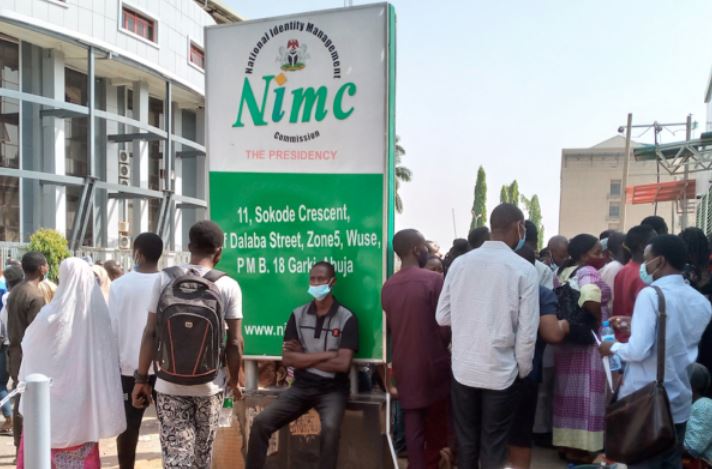
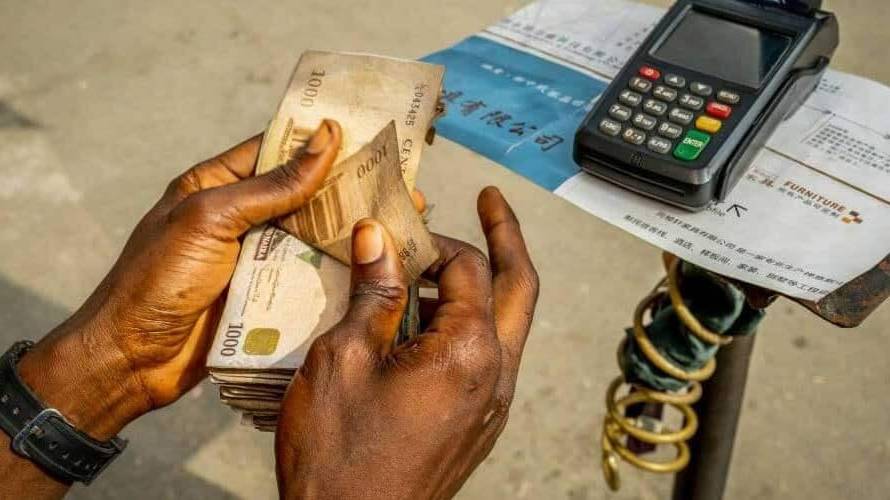
“But the DSO’s ambition doesn’t stop at television. It is being built as a piece of Nigeria’s core digital infrastructure. Imagine a system that not only entertains but also broadcasts emergency alerts, delivers educational programmes to students in rural areas, and provides a direct line to public information. The future DSO will integrate with the National Identity Number (NIN) for secure access and connect with digital payment systems, allowing citizens to seamlessly pay for services or access government portals—all through their television. Thanks to Nigeria’s Data Protection Act, this interconnected system is designed with security and privacy at its core.”
Consultant, IBST Limited, Aderemi Ogunpitan, said Nigeria’s DSO has underperformed compared to its original promise, but it is not dead, if restructured properly — aligned with satellite strategy, spectrum policy, DPI, and private-sector incentives.
He said it could shift from being a delayed TV upgrade project to becoming a foundational layer for connecting millions of unserved Nigerians and accelerating digital inclusion.
According to him, because analogue hasn’t been fully switched off, many broadcasters still carry dual costs, while pay-TV platforms and Internet streaming have expanded faster than the state-led DSO platform.
Ogunpitan submitted that instead of treating DSO towers as simple broadcast masts, they could become multi-service digital hubs. He said each site could combine digital TV transmission, satellite backhaul (NigComSat and LEO providers like Starlink), community Wi-Fi or fixed wireless access and enable DPI services such as NIN enrolment, digital payments, e-health and e-learning portals.
He said the above to say that integration is key, saying DSO platforms must link directly into Nigeria’s identity (NIN) and payment systems via APIs. He said TV platforms should allow citizens to access government services securely — using token-based authentication and existing banking rails — without turning STBs into complex KYC devices.
This report is produced under the DPI Africa Journalism Fellowship Programme of the Media Foundation for West Africa and Co-Develop.